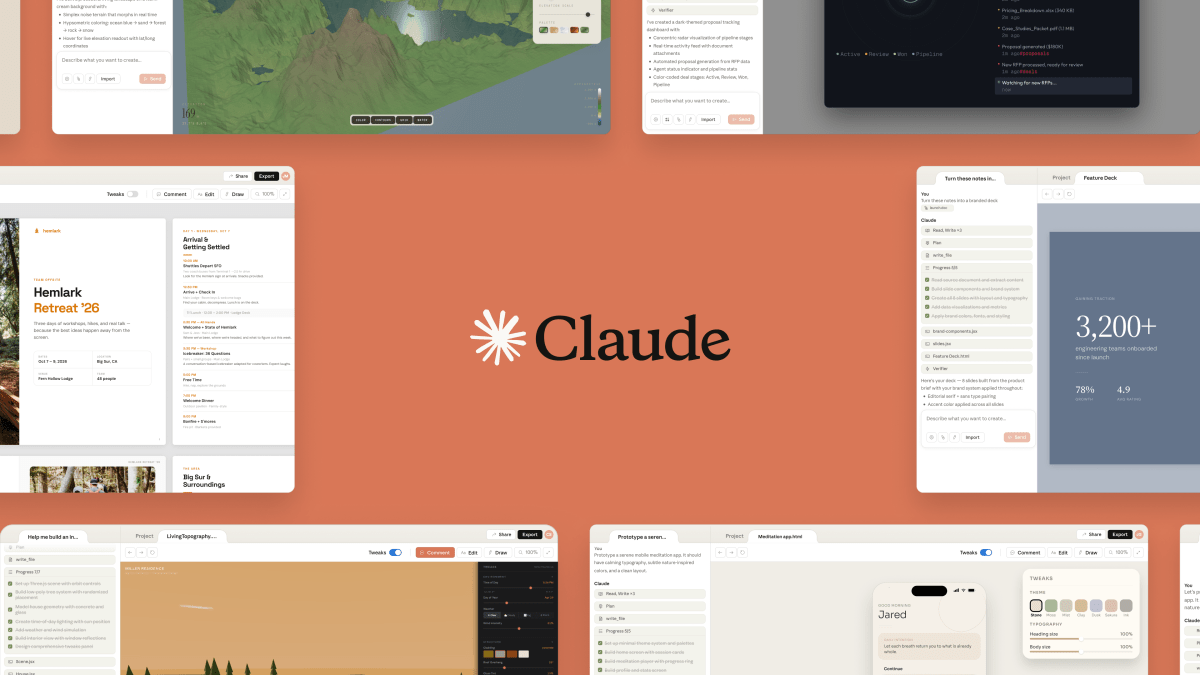
128,000 output tokens. We’re officially moving past “chatbots” and into “automated department” territory. Anthropic’s release of Claude Opus 4.7 isn’t just a spec bump; it’s a fundamental shift in the scale of autonomous work an LLM can handle in a single pass.
What happened
On April 16, 2026, Anthropic released Claude Opus 4.7, their most advanced model to date. While the previous version was already a leader in reasoning, 4.7 introduces a massive expansion in capacity: a 1,000,000 token context window and a staggering 128,000 token output limit.
This model is designed for high-stakes professional knowledge work, achieving an 80.9% on the SWE-bench Verified benchmark, a significant jump that highlights its precision in identifying software race conditions and complex architectural bugs. It is currently available via the Anthropic API, Amazon Bedrock, and Google Cloud Vertex AI.
Under the hood
Opus 4.7 isn’t just bigger; it’s architecturally more efficient.
The New Tokenizer
Anthropic has implemented a new tokenizer that produces up to 35% more tokens for the same input text compared to the 3.x and 4.0 series. While this might slightly increase request costs (as you’re paying for more tokens), it allows for much higher information density and more nuanced reasoning in the same context space.
Vision and Resolution
The vision capabilities have been upgraded to process images up to 2,576 pixels. This is a critical threshold for practitioners who need the model to analyze dense technical diagrams, high-resolution screenshots of complex UIs, or small-print legal documents.
Agentic Performance
The model is optimized for “computer use” and agentic workflows. Anthropic claims an estimated task-completion horizon of up to 14.5 hours for autonomous tasks. This means the model can sustain complex, multi-step engineering work with significantly less human supervision than its predecessors.
Pricing and Caching
- Input: $5 per million tokens.
- Output: $25 per million tokens.
- Prompt Caching: Up to 90% savings for frequently used context (like a massive codebase).
- Batch Processing: 50% discount for non-urgent tasks.
How to try it yourself
You can access Opus 4.7 today via the Anthropic Console or through major cloud providers.
Prerequisites
- An Anthropic API account with Tier 2+ access (for high rate limits).
- Python 3.10+ and the
anthropiclibrary.
Minimal Working Example
Here is how to initialize a call that takes advantage of the expanded output limit:
import anthropic

client = anthropic.Anthropic(api_key="your_api_key")

message = client.messages.create(
    model="claude-4-7-opus-20260416",
    max_tokens=128000, # The new output frontier
    temperature=0,
    system="You are a senior software architect. Analyze this 500,000 token codebase.",
    messages=[
        {
            "role": "user",
            "content": "Identify all potential race conditions in the concurrency layer."
        }
    ]
)
print(message.content)
Quick Test
To confirm the vision improvements, upload a high-resolution screenshot (at least 2000px wide) of a complex dashboard to the Claude.ai interface (Pro/Max users) and ask: “Identify every UI element that violates WCAG 2.1 contrast accessibility standards.”
Where this fits
Opus 4.7 sits at the very top of the performance pyramid, competing directly with OpenAI’s latest flagship models.
- Vs. Claude Sonnet 4.6: Sonnet remains the choice for speed and cost-efficiency. However, for tasks requiring the full 1M context or the 128k output (like writing an entire technical book or refactoring a massive legacy monolith), Opus 4.7 is the only viable option.
- Vs. GPT-4o/o1: While OpenAI’s models excel in conversational speed and specific reasoning tasks, Opus 4.7’s 80.9% SWE-bench score and its massive output window give it a distinct edge for long-running engineering agents.
What practitioners are saying
The consensus among engineers on r/LocalLLaMA and Hacker News is that the 128k output limit is the “sleeper feature” of this release. One developer noted, “We’ve had big context windows for a while, but we’ve been trapped by tiny output limits. 128k means I can actually ask for a full migration script for a 50-table database in one go.”
However, the sentiment scan reveals concerns about the “request cost creep” caused by the new tokenizer. Because the model is more verbose and the tokenizer is more granular, users are seeing higher billable token counts for similar prompts compared to Opus 4.6. On X, some practitioners have called the ASL-3 safety protocols “overly cautious,” noting that the model occasionally refuses complex security research tasks due to strict instruction adherence.
Takeaways
- Output is the New Context: Stop thinking about short chat turns. Use the 128k limit to generate entire modules, documentation suites, or test harnesses.
- Vision for Detail: The 2,576px resolution makes this the best model for analyzing complex technical diagrams and dense UI screenshots.
- Tokenizer Math: Budget for a ~30% increase in token counts for your existing prompts due to the new tokenizer architecture.
- Safety First: Operating under ASL-3 means better resistance to prompt injection, but expect more frequent safety refusals on edge-case security prompts.
Full analysis: {BLOG_URL}