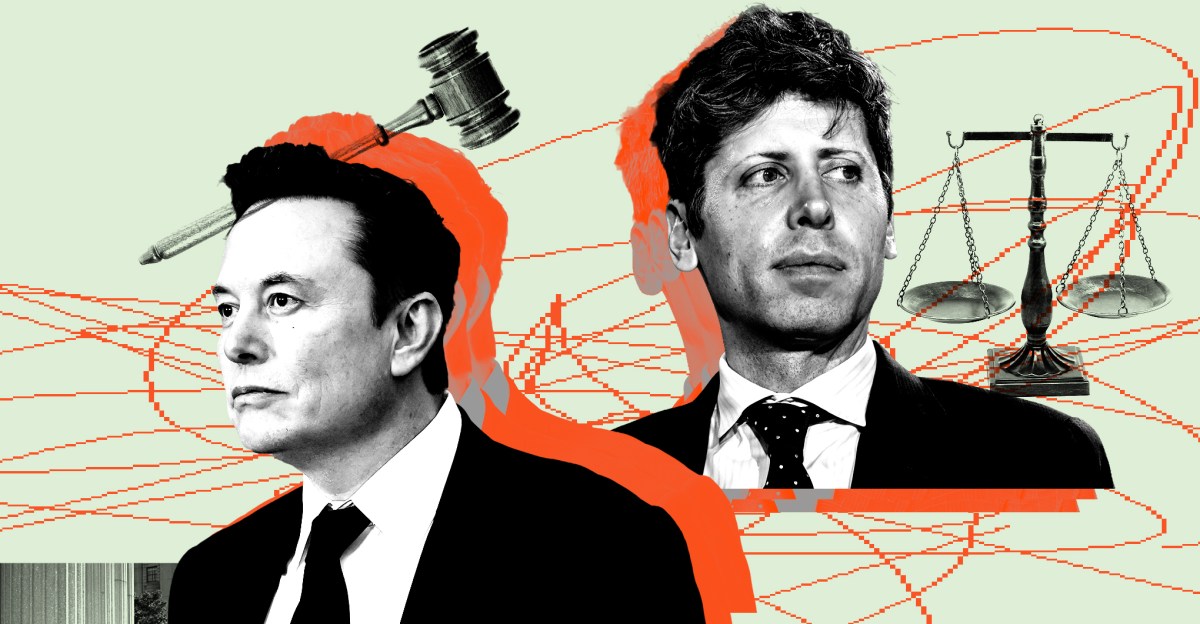
Elon Musk’s high-stakes legal crusade against OpenAI has ended not with a definitive ruling on the ethics of AI, but with a whimper about a calendar. On May 18, 2026, a federal jury in Oakland, California, unanimously rejected Musk’s $150 billion lawsuit, finding that his claims were barred by the statute of limitations The Guardian.
For practitioners, the verdict is a masterclass in procedural reality over ideological debate. While the trial surfaced years of internal emails and dramatic testimony from the likes of Satya Nadella, the jury took less than two hours to decide that Musk simply waited too long to complain about OpenAI’s pivot to profit. This decision clears the final major legal hurdle for OpenAI’s restructuring into a Public Benefit Corporation (PBC) and its march toward a $1 trillion IPO Geekwire.
The Verdict: Timing Over Truth
The jury’s finding was specific and procedural. Under California law, a breach of charitable trust carries a three-year statute of limitations, while unjust enrichment has a two-year limit. OpenAI’s defense successfully argued that Musk was fully aware of the company’s commercial trajectory as early as 2017, and certainly by 2021 MIT Tech Review.
Because Musk did not file his suit until 2024, the legal clock had already run out. Judge Yvonne Gonzalez Rogers, who presided over the case, immediately accepted the jury’s advisory verdict and dismissed the claims. “I think there’s a substantial amount of evidence to support the jury’s finding, which is why I was prepared to dismiss on the spot,” she noted The Guardian.
The Restructuring: From Nonprofit to $1T Powerhouse
With the threat of a court-ordered unwinding removed, OpenAI is finalizing its transition into a Public Benefit Corporation. This structure is designed to balance fiduciary duties to shareholders with its stated mission of safety and public benefit.
Key details of the new corporate structure include:
- Ownership Stakes: The original OpenAI nonprofit retains a 26% stake in the PBC, valued at approximately $130 billion. Microsoft maintains a 27% commercial equity stake Geekwire.
- Control Mechanisms: OpenAI claims the nonprofit remains the ultimate controlling entity, though critics—and evidence from the trial—suggest that commercial interests and the Microsoft alliance are the primary drivers OpenAI.
- IPO Readiness: Analysts now expect an IPO that could value the company at $1 trillion, making it one of the largest public offerings in history The Guardian.
What the Trial Revealed
While the case was dismissed on a technicality, the three weeks of testimony provided a rare, unvarnished look at the “seedy underbelly” of Silicon Valley’s AI race The Verge.
Satya Nadella’s testimony was particularly illuminating. He clarified that Microsoft’s $13 billion investment was never intended as a “donation” but was a purely commercial partnership from the start CNBC. This directly contradicted Musk’s narrative that the partnership was a betrayal of a charitable mission. Conversely, internal emails from 2017 showed that OpenAI’s leadership, including Greg Brockman and Ilya Sutskever, were already expressing deep distrust of both Musk and Altman’s individual ambitions, at one point fearing a “Musk dictatorship” The Verge.
Competitive Landscape: OpenAI vs. xAI
The verdict leaves Musk’s own AI venture, xAI, in a difficult position. During the trial, Musk admitted under oath that xAI’s capabilities lag behind OpenAI, Google, and Anthropic. Furthermore, xAI recently leased its primary Colossus 1 data center to Anthropic, signaling infrastructure constraints that OpenAI—backed by Microsoft’s billions—does not face The Guardian.
Community Sentiment
The reaction across the industry has been largely cynical. On platforms like Reddit and Hacker News, the consensus is that the trial was a “clown show” where neither side emerged with their reputation intact. While OpenAI won the legal battle, many practitioners feel Musk succeeded in cementing the narrative that the company’s original nonprofit mission was a “marketing move” used to acquire talent and tax-advantaged status before pivoting to profit Reddit.
Takeaways for Builders
- Governance is not a “Vibe”: If you are building or donating to a nonprofit with the expectation of long-term mission adherence, the legal structure must be airtight. “Founding promises” are not contracts.
- The Statute of Limitations is Absolute: In high-stakes corporate disputes, the moment you suspect a breach is the moment the clock starts. Waiting to see if a competitor succeeds before suing is a losing strategy.
- The $1T IPO is the New North Star: OpenAI is no longer a research lab; it is a market-driven tech powerhouse. Expect product roadmaps to shift even more aggressively toward enterprise ROI and high-margin features.
- Public Benefit Corporations (PBCs) are the New Standard: Following Anthropic and now OpenAI, the PBC is becoming the default for frontier AI labs, providing a legal shield to balance profit with “safety” mandates.
Musk has already announced his intent to appeal to the Ninth Circuit, but for now, the path to a trillion-dollar OpenAI is wide open Ars Technica.